This is default featured slide 1 title

Go to Blogger edit html and find these sentences.Now replace these sentences with your own descriptions.This theme is Bloggerized by Lasantha Bandara - Premiumbloggertemplates.com.

This is default featured slide 2 title

Go to Blogger edit html and find these sentences.Now replace these sentences with your own descriptions.This theme is Bloggerized by Lasantha Bandara - Premiumbloggertemplates.com.

This is default featured slide 3 title

Go to Blogger edit html and find these sentences.Now replace these sentences with your own descriptions.This theme is Bloggerized by Lasantha Bandara - Premiumbloggertemplates.com.

This is default featured slide 4 title

Go to Blogger edit html and find these sentences.Now replace these sentences with your own descriptions.This theme is Bloggerized by Lasantha Bandara - Premiumbloggertemplates.com.

This is default featured slide 5 title

Go to Blogger edit html and find these sentences.Now replace these sentences with your own descriptions.This theme is Bloggerized by Lasantha Bandara - Premiumbloggertemplates.com.

Selasa, 28 Juni 2011

[L408.Ebook] PDF Download Antibiotic Resistance: Understanding and Responding to an Emerging Crisis, Portable Documents (FT Press Science), by Karl S. Drlica, David

PDF Download Antibiotic Resistance: Understanding and Responding to an Emerging Crisis, Portable Documents (FT Press Science), by Karl S. Drlica, David

Well, when else will certainly you find this prospect to obtain this publication Antibiotic Resistance: Understanding And Responding To An Emerging Crisis, Portable Documents (FT Press Science), By Karl S. Drlica, David soft file? This is your great opportunity to be here and also get this wonderful publication Antibiotic Resistance: Understanding And Responding To An Emerging Crisis, Portable Documents (FT Press Science), By Karl S. Drlica, David Never leave this book before downloading this soft documents of Antibiotic Resistance: Understanding And Responding To An Emerging Crisis, Portable Documents (FT Press Science), By Karl S. Drlica, David in link that we supply. Antibiotic Resistance: Understanding And Responding To An Emerging Crisis, Portable Documents (FT Press Science), By Karl S. Drlica, David will actually make a large amount to be your friend in your lonesome. It will be the most effective partner to enhance your company and also hobby.

Antibiotic Resistance: Understanding and Responding to an Emerging Crisis, Portable Documents (FT Press Science), by Karl S. Drlica, David

Antibiotic Resistance: Understanding and Responding to an Emerging Crisis, Portable Documents (FT Press Science), by Karl S. Drlica, David


Antibiotic Resistance: Understanding and Responding to an Emerging Crisis, Portable Documents (FT Press Science), by Karl S. Drlica, David

PDF Download Antibiotic Resistance: Understanding and Responding to an Emerging Crisis, Portable Documents (FT Press Science), by Karl S. Drlica, David

Antibiotic Resistance: Understanding And Responding To An Emerging Crisis, Portable Documents (FT Press Science), By Karl S. Drlica, David. It is the time to enhance and also revitalize your ability, knowledge and also experience included some amusement for you after very long time with monotone things. Working in the workplace, visiting study, picking up from exam and also even more activities could be completed and also you should begin brand-new points. If you really feel so worn down, why don't you attempt new thing? A very easy thing? Reviewing Antibiotic Resistance: Understanding And Responding To An Emerging Crisis, Portable Documents (FT Press Science), By Karl S. Drlica, David is exactly what our company offer to you will recognize. As well as the book with the title Antibiotic Resistance: Understanding And Responding To An Emerging Crisis, Portable Documents (FT Press Science), By Karl S. Drlica, David is the reference now.

As recognized, book Antibiotic Resistance: Understanding And Responding To An Emerging Crisis, Portable Documents (FT Press Science), By Karl S. Drlica, David is well known as the home window to open up the world, the life, and also new thing. This is exactly what individuals now need so much. Even there are lots of people that do not like reading; it can be an option as reference. When you actually require the ways to create the following inspirations, book Antibiotic Resistance: Understanding And Responding To An Emerging Crisis, Portable Documents (FT Press Science), By Karl S. Drlica, David will truly assist you to the means. Moreover this Antibiotic Resistance: Understanding And Responding To An Emerging Crisis, Portable Documents (FT Press Science), By Karl S. Drlica, David, you will have no remorse to get it.

To obtain this book Antibiotic Resistance: Understanding And Responding To An Emerging Crisis, Portable Documents (FT Press Science), By Karl S. Drlica, David, you could not be so baffled. This is on the internet book Antibiotic Resistance: Understanding And Responding To An Emerging Crisis, Portable Documents (FT Press Science), By Karl S. Drlica, David that can be taken its soft file. It is different with the online book Antibiotic Resistance: Understanding And Responding To An Emerging Crisis, Portable Documents (FT Press Science), By Karl S. Drlica, David where you could get a book then the vendor will certainly send out the published book for you. This is the location where you could get this Antibiotic Resistance: Understanding And Responding To An Emerging Crisis, Portable Documents (FT Press Science), By Karl S. Drlica, David by online and also after having manage acquiring, you can download Antibiotic Resistance: Understanding And Responding To An Emerging Crisis, Portable Documents (FT Press Science), By Karl S. Drlica, David alone.

So, when you need quickly that book Antibiotic Resistance: Understanding And Responding To An Emerging Crisis, Portable Documents (FT Press Science), By Karl S. Drlica, David, it does not need to get ready for some days to receive guide Antibiotic Resistance: Understanding And Responding To An Emerging Crisis, Portable Documents (FT Press Science), By Karl S. Drlica, David You can straight obtain guide to conserve in your tool. Also you like reading this Antibiotic Resistance: Understanding And Responding To An Emerging Crisis, Portable Documents (FT Press Science), By Karl S. Drlica, David almost everywhere you have time, you can appreciate it to check out Antibiotic Resistance: Understanding And Responding To An Emerging Crisis, Portable Documents (FT Press Science), By Karl S. Drlica, David It is definitely handy for you which want to get the much more valuable time for reading. Why don't you invest 5 minutes and also spend little cash to obtain the book Antibiotic Resistance: Understanding And Responding To An Emerging Crisis, Portable Documents (FT Press Science), By Karl S. Drlica, David right here? Never allow the extra thing quits you.

Antibiotic Resistance: Understanding and Responding to an Emerging Crisis, Portable Documents (FT Press Science), by Karl S. Drlica, David

Authored by two leading investigators, this book presents a thorough and authoritative overview of this multifaceted field of science. Pathogenic bacteria have been evolving and spreading resistance to diverse classes of antibiotics. As a result, we risk losing our ability to control and treat infectious diseases. Understanding antibiotic resistance, therefore, is becoming increasingly essential for a broad audience of healthcare professionals, biomedical and public health researchers, students, and policymakers. The authors answer questions such as: What is resistance? How does it emerge? How do common human activities contribute to resistance? What can we do about it? How can we strengthen our “first lines of defense” against resistance? Are there better ways to discover new antibiotics? What unique issues are associated with MRSA and viral influenza? In addition to defining and evaluating one of the most important emerging threats to public health, the authors explain what can be done to minimize risks to public health, and to preserve and extend the effectiveness of existing and new antibiotics.

  • Sales Rank: #1128420 in eBooks
  • Published on: 2010-11-24
  • Released on: 2010-11-24
  • Format: Kindle eBook
  • Dimensions: 1.49 pounds

From the Back Cover

The emergence and spread of antibiotic resistance is a growing medical and public health emergency. Misuse and overuse of antibiotics is putting us at risk of losing our ability to cure infectious diseases. Karl Drlica and David S. Perlin give an authoritative and thorough explanation of all aspects of antibiotic resistance, from the basic science to the strategies that could minimize resistance problems and extend the life spans of existing antibiotic agents. Intended as the definitive book on a major biomedical issue, Antibiotic Resistance will be required reading for investigators and serious students in microbiology, infectious disease, pharmaceutics, and public health; physicians; and students in pharmacy, medicine, and veterinary medicine.

About the Author

Karl Drlica, Ph.D. is a Principal Investigator at the Public Health Research Institute and Professor of Microbiology & Molecular Genetics at the UMDNJ–New Jersey Medical School in Newark. His laboratory focuses on fluoroquinolone action and resistance with Mycobacteriun tuberculosis and other bacteria, including approaches for slowing the enrichment and amplification of resistant bacterial subpopulations.

David S. Perlin, Ph.D. is Executive Director of the Public Health Research Institute and UMDNJ Regional Biocontainment Laboratory, as well as Professor of Microbiology & Molecular Genetics at the New Jersey Medical School in Newark. He is also a Fellow of the New York Academy of Sciences. Dr. Perlin’s laboratory explores mechanisms of antifungal drug-resistance, rapid detection of drug resistant bloodstream pathogens in high-risk patients, and the application of small-animal models for the study of respiratory pathogens.

Most helpful customer reviews

8 of 8 people found the following review helpful.
readable for a layman. too fundamental for experts
By reviewer
Having finished the book in one sitting, I flipped back to the preface in search of what its targeted audience is. It was "initially drafted to supplement studies of infectious disease" and the authors later "aim to make the principles of antibiotic use and effectiveness available to a large audience: farmers, hospital administrators.....and especially individual users."

The book's content and style of writing serves well for the above targeted audience. The book is suitable for use at a high school or college freshman year level as a supplement. Interesting historical facts and social ramifications interspersed throughout the book. The book is light on the academic or theoretical side of it, probably intentionally so. It touches on biological mechanisms just enough to make a layman understand what they want to tell next, nothing more. Nonetheless, this book is a laudable attempt to educate the public about the subject.

3 of 3 people found the following review helpful.
Antibiotic Use: Cause and Effect
By M. A. Ramos
The authors outline and explain a problem that is not new but is starting to be brought into the public light. This book is written for people who use antibiotics and is written at an introductory yet clear level. The paramedics, farmers, hospital administrators and especially the public at large should read this book. If you do not have a background in basic biology the authors have included two appendix that give the basic background required to understand the rest of the text and I would recommend starting there.

The book is well presented on how the medical and agricultural use of antibiotics and their misuse has lead to pathogens mutating and becoming antibiotic resistance. And at present dosage and actually overuse of antibiotics will lead to a pathogen that will cause a pandemic. When is not discussed but when you read that rate at which the resistance strain mutate and spread it seems that this should be a subject of high priority. Yet pharmaceutical companies have been shutting down their antibiotic research division for it is not cost effective for them to continue.

The book is informative and not an alarmist manifesto. It covers the facts of use and history of antibiotics and present day measures. And proposes how we may be able to stop this path to a super resistant pathogen; a term not used by the authors. Most people know that the effectiveness of any type of drug diminishes with use and in low dosage the pathogens themselves become resistant. In order to rectify this situation will take a change of culture for all involved; farmers, medical professionals and moist important the general public. At present the authors show that all we are doing at present to slow down the spread and creation of antibiotic resistant pathogens is to increase dosage levels. These increased dosages may have more side effects but avoid the spread of the resistant pathogens.

I highly recommend that this book be read by medical practitioner, farmers and anyone who uses antibiotics. This is a very easy and interesting read.

4 of 5 people found the following review helpful.
First strike is still deadly
By haskpts
Antibiotic resistance is the ability of a microorganism to withstand the effects of an antibiotic.
Antibiotic resistance evolves naturally via natural selection through random mutation, but it could also be engineered by applying an evolutionary stress on a population. Antibiotic resistance is a consequence of evolution via natural selection.

Once such a gene is generated, bacteria can then transfer the genetic information in a horizontal fashion (between individuals) by plasmid exchange. "Antibiotic Resistance: Understanding And Responding To An Emerging Crisis" explains the concept of multiresistant organisms (aka; a "Superbug").

Bacteria which have a mutation allowing them to survive antibiotic intervention will live on to reproduce; passing on this resistance to their offspring in the next generation

Drlica & Perlin point out that the patterns of antibiotic usage greatly affect the number of resistant organisms which develop. Overuse of broad-spectrum antibiotics, such as second- and third-generation cephalosporins, greatly hastens the development of methicillin resistance.

Other factors contributing towards resistance include incorrect diagnosis, unnecessary prescriptions, improper use of antibiotics by patients, and the use of antibiotics as livestock food additives for growth promotion.

The book has the classic hallmarks of becoming a desktop reference for the clinician and those interested in new emerging bio-hazardous threats. I found the glossary very helpful and also the "light" and playful arrangement of facts an figures made the book enjoyable NOT another bland, boring "for scientists only". The layout reminded me of the "... For Dummies" and "The Complete Idiot's Guide To..." books. Which is a good thing. Comprehension of materials is the main point. No use having very dry, stuffy and hard to read or follow books ... which end up covered in dust and cobwebs for their unreadability.

See all 17 customer reviews...

Antibiotic Resistance: Understanding and Responding to an Emerging Crisis, Portable Documents (FT Press Science), by Karl S. Drlica, David PDF
Antibiotic Resistance: Understanding and Responding to an Emerging Crisis, Portable Documents (FT Press Science), by Karl S. Drlica, David EPub
Antibiotic Resistance: Understanding and Responding to an Emerging Crisis, Portable Documents (FT Press Science), by Karl S. Drlica, David Doc
Antibiotic Resistance: Understanding and Responding to an Emerging Crisis, Portable Documents (FT Press Science), by Karl S. Drlica, David iBooks
Antibiotic Resistance: Understanding and Responding to an Emerging Crisis, Portable Documents (FT Press Science), by Karl S. Drlica, David rtf
Antibiotic Resistance: Understanding and Responding to an Emerging Crisis, Portable Documents (FT Press Science), by Karl S. Drlica, David Mobipocket
Antibiotic Resistance: Understanding and Responding to an Emerging Crisis, Portable Documents (FT Press Science), by Karl S. Drlica, David Kindle

Antibiotic Resistance: Understanding and Responding to an Emerging Crisis, Portable Documents (FT Press Science), by Karl S. Drlica, David PDF

Antibiotic Resistance: Understanding and Responding to an Emerging Crisis, Portable Documents (FT Press Science), by Karl S. Drlica, David PDF

Antibiotic Resistance: Understanding and Responding to an Emerging Crisis, Portable Documents (FT Press Science), by Karl S. Drlica, David PDF

Senin, 27 Juni 2011

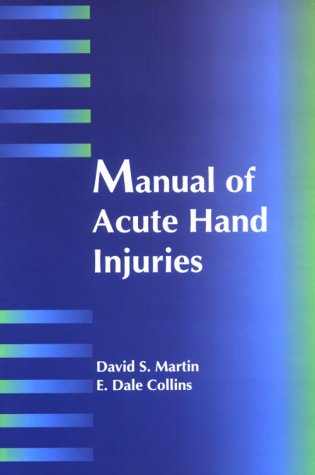
[S384.Ebook] Ebook Manual of Acute Hand Injuries, 1e, by David S. Martin MD, E. Dale Collins MD

Ebook Manual of Acute Hand Injuries, 1e, by David S. Martin MD, E. Dale Collins MD

Why should soft file? As this Manual Of Acute Hand Injuries, 1e, By David S. Martin MD, E. Dale Collins MD, many individuals also will certainly need to purchase guide earlier. But, in some cases it's up until now way to get guide Manual Of Acute Hand Injuries, 1e, By David S. Martin MD, E. Dale Collins MD, even in various other country or city. So, to alleviate you in finding the books Manual Of Acute Hand Injuries, 1e, By David S. Martin MD, E. Dale Collins MD that will sustain you, we help you by supplying the lists. It's not just the listing. We will certainly offer the advised book Manual Of Acute Hand Injuries, 1e, By David S. Martin MD, E. Dale Collins MD link that can be downloaded and install straight. So, it will not require even more times or perhaps days to present it as well as other publications.

Manual of Acute Hand Injuries, 1e, by David S. Martin MD, E. Dale Collins MD

Manual of Acute Hand Injuries, 1e, by David S. Martin MD, E. Dale Collins MD


Manual of Acute Hand Injuries, 1e, by David S. Martin MD, E. Dale Collins MD

Ebook Manual of Acute Hand Injuries, 1e, by David S. Martin MD, E. Dale Collins MD

Manual Of Acute Hand Injuries, 1e, By David S. Martin MD, E. Dale Collins MD. Discovering how to have reading routine is like learning to try for eating something that you actually do not really want. It will certainly require more times to aid. Moreover, it will certainly also little bit make to serve the food to your mouth and also ingest it. Well, as reviewing a publication Manual Of Acute Hand Injuries, 1e, By David S. Martin MD, E. Dale Collins MD, occasionally, if you need to review something for your brand-new tasks, you will certainly feel so dizzy of it. Even it is a publication like Manual Of Acute Hand Injuries, 1e, By David S. Martin MD, E. Dale Collins MD; it will certainly make you really feel so bad.

Reading Manual Of Acute Hand Injuries, 1e, By David S. Martin MD, E. Dale Collins MD is a quite useful interest and doing that can be undergone whenever. It implies that reading a publication will certainly not restrict your task, will not compel the moment to invest over, as well as will not invest much money. It is an extremely affordable and reachable point to acquire Manual Of Acute Hand Injuries, 1e, By David S. Martin MD, E. Dale Collins MD However, keeping that very cheap thing, you could obtain something new, Manual Of Acute Hand Injuries, 1e, By David S. Martin MD, E. Dale Collins MD something that you never ever do and also enter your life.

A new encounter could be obtained by reviewing a book Manual Of Acute Hand Injuries, 1e, By David S. Martin MD, E. Dale Collins MD Also that is this Manual Of Acute Hand Injuries, 1e, By David S. Martin MD, E. Dale Collins MD or other publication compilations. Our company offer this book because you can discover a lot more things to motivate your skill and also expertise that will make you a lot better in your life. It will be also helpful for the people around you. We suggest this soft data of the book below. To know ways to obtain this publication Manual Of Acute Hand Injuries, 1e, By David S. Martin MD, E. Dale Collins MD, find out more here.

You can discover the link that we provide in site to download and install Manual Of Acute Hand Injuries, 1e, By David S. Martin MD, E. Dale Collins MD By buying the inexpensive price and get completed downloading, you have finished to the initial stage to obtain this Manual Of Acute Hand Injuries, 1e, By David S. Martin MD, E. Dale Collins MD It will certainly be nothing when having actually bought this book as well as not do anything. Review it as well as expose it! Spend your couple of time to merely review some sheets of page of this book Manual Of Acute Hand Injuries, 1e, By David S. Martin MD, E. Dale Collins MD to review. It is soft documents and also very easy to read any place you are. Appreciate your brand-new habit.

Manual of Acute Hand Injuries, 1e, by David S. Martin MD, E. Dale Collins MD

Contributed by the Division of Plastic Surgery at Washington Univ., this comprehensive, practical handbook covers common techniques, differential diagnosis, and practical advice on how to best choose from the available therapies to treat hand injuries. This unique manual includes over 300 superior and detailed line drawings that highlight anatomy, testing maneuvers, and surgical techniques.

  • Sales Rank: #6009724 in Books
  • Published on: 1998-01-15
  • Original language: English
  • Number of items: 1
  • Dimensions: 9.25" h x 6.25" w x 1.00" l,
  • Binding: Hardcover
  • 675 pages

Most helpful customer reviews

See all customer reviews...

Manual of Acute Hand Injuries, 1e, by David S. Martin MD, E. Dale Collins MD PDF
Manual of Acute Hand Injuries, 1e, by David S. Martin MD, E. Dale Collins MD EPub
Manual of Acute Hand Injuries, 1e, by David S. Martin MD, E. Dale Collins MD Doc
Manual of Acute Hand Injuries, 1e, by David S. Martin MD, E. Dale Collins MD iBooks
Manual of Acute Hand Injuries, 1e, by David S. Martin MD, E. Dale Collins MD rtf
Manual of Acute Hand Injuries, 1e, by David S. Martin MD, E. Dale Collins MD Mobipocket
Manual of Acute Hand Injuries, 1e, by David S. Martin MD, E. Dale Collins MD Kindle

Manual of Acute Hand Injuries, 1e, by David S. Martin MD, E. Dale Collins MD PDF

Manual of Acute Hand Injuries, 1e, by David S. Martin MD, E. Dale Collins MD PDF

Manual of Acute Hand Injuries, 1e, by David S. Martin MD, E. Dale Collins MD PDF

Jumat, 24 Juni 2011

[P391.Ebook] PDF Ebook Rogue Lawyer: A Novel, by John Grisham

PDF Ebook Rogue Lawyer: A Novel, by John Grisham

Rogue Lawyer: A Novel, By John Grisham. The developed technology, nowadays support everything the human requirements. It includes the day-to-day tasks, jobs, workplace, enjoyment, and also more. One of them is the excellent website link and computer system. This problem will certainly ease you to sustain among your hobbies, checking out habit. So, do you have going to review this e-book Rogue Lawyer: A Novel, By John Grisham now?
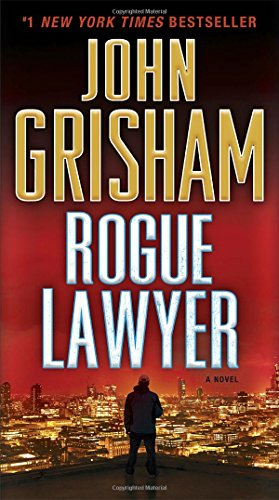
Rogue Lawyer: A Novel, by John Grisham

Rogue Lawyer: A Novel, by John Grisham


Rogue Lawyer: A Novel, by John Grisham

PDF Ebook Rogue Lawyer: A Novel, by John Grisham

Rogue Lawyer: A Novel, By John Grisham. The developed modern technology, nowadays assist every little thing the human needs. It includes the everyday activities, jobs, workplace, amusement, as well as much more. One of them is the excellent web link as well as computer system. This problem will certainly relieve you to support one of your leisure activities, checking out practice. So, do you have willing to review this publication Rogue Lawyer: A Novel, By John Grisham now?

As we stated previously, the innovation helps us to always identify that life will be always easier. Checking out e-book Rogue Lawyer: A Novel, By John Grisham routine is also among the advantages to obtain today. Why? Modern technology can be utilized to supply the publication Rogue Lawyer: A Novel, By John Grisham in only soft data system that can be opened up each time you desire and all over you need without bringing this Rogue Lawyer: A Novel, By John Grisham prints in your hand.

Those are some of the benefits to take when obtaining this Rogue Lawyer: A Novel, By John Grisham by online. However, exactly how is the method to obtain the soft data? It's really appropriate for you to see this web page due to the fact that you can obtain the link web page to download and install the publication Rogue Lawyer: A Novel, By John Grisham Just click the link offered in this article and also goes downloading. It will certainly not take much time to obtain this e-book Rogue Lawyer: A Novel, By John Grisham, like when you require to choose publication shop.

This is additionally one of the reasons by obtaining the soft documents of this Rogue Lawyer: A Novel, By John Grisham by online. You may not require even more times to spend to go to the publication establishment and also hunt for them. Often, you likewise don't find guide Rogue Lawyer: A Novel, By John Grisham that you are looking for. It will certainly squander the time. But right here, when you see this web page, it will certainly be so very easy to get as well as download and install guide Rogue Lawyer: A Novel, By John Grisham It will certainly not take sometimes as we mention before. You could do it while doing another thing in your home and even in your office. So easy! So, are you doubt? Merely exercise exactly what we offer here and check out Rogue Lawyer: A Novel, By John Grisham what you love to check out!

Rogue Lawyer: A Novel, by John Grisham

#1 NEW YORK TIMES BESTSELLER • NAMED ONE OF THE BEST BOOKS OF THE YEAR BY THE WASHINGTON POST AND NPR • Featuring one of John Grisham’s most colorful, outrageous, and vividly drawn characters yet, Rogue Lawyer showcases the master of the legal thriller at his very best.
 
On the right side of the law—sort of—Sebastian Rudd is not your typical street lawyer. His office is a customized bulletproof van, complete with Wi-Fi, a bar, a small fridge, and fine leather chairs. He has no firm, no partners, and only one employee: his heavily armed driver, who also so happens to be his bodyguard, law clerk, confidant, and golf caddie. Sebastian drinks small-batch bourbon and carries a gun. He defends people other lawyers won’t go near: a drug-addled, tattooed kid rumored to be in a satanic cult; a vicious crime lord on death row; a homeowner arrested for shooting at a SWAT team that mistakenly invaded his house. Why these clients? Because Sebastian believes everyone is entitled to a fair trial—even if he has to bend the law to secure one.
 
Praise for Rogue Lawyer
 
“Terrific . . . inventive . . . Grisham still makes it look easy.”—Maureen Corrigan, The Washington Post
 
“Sebastian Rudd is . . . a kind of twenty-first-century Philip Marlowe . . . with a blunt, rude, gravelly poetic wiseguy voice.”—Benjamin Percy, The New York Times Book Review
 
“Deeply engaging and entertaining . . . [Grisham finds] intense drama in the little skirmishes that play out across our legal system every day.”—Charles Finch, USA Today
 
“Grisham has taken a step in an intriguing new direction.”—Janet Maslin, The New York Times

  • Sales Rank: #6557 in Books
  • Brand: Dell Pub Co
  • Published on: 2016-07-26
  • Released on: 2016-07-26
  • Original language: English
  • Number of items: 1
  • Dimensions: 7.50" h x 1.00" w x 4.20" l, .0 pounds
  • Binding: Paperback
  • 400 pages
Features
  • Dell Pub Co

Review
“Terrific . . . inventive . . . John Grisham still makes it look easy.”—Maureen Corrigan, The Washington Post
 
“Sebastian Rudd is . . . a kind of twenty-first-century Philip Marlowe . . . with a blunt, rude, gravelly poetic wiseguy voice.”—Benjamin Percy, The New York Times Book Review
 
“Deeply engaging and entertaining . . . [Grisham finds] intense drama in the little skirmishes that play out across our legal system every day.”—Charles Finch, USA Today
 
“Grisham has taken a step in an intriguing new direction.”—Janet Maslin, The New York Times

About the Author
John Grisham is the author of twenty-eight novels, one work of nonfiction, a collection of stories, and six novels for young readers.

Excerpt. © Reprinted by permission. All rights reserved.
1.
 
     My name is Sebastian Rudd, and though I am a well‑known street lawyer, you will not see my name on billboards, on bus benches, or screaming at you from the yellow pages. I don’t pay to be seen on television, though I am often there. My name is not listed in any phone book. I do not maintain a traditional office. I carry a gun, legally, because my name and face tend to attract attention from the type of people who also carry guns and don’t mind using them. I live alone, usually sleep alone, and do not possess the patience and understanding necessary to maintain friendships. The law is my life, always consuming and occasionally fulfilling. I wouldn’t call it a “jealous mistress” as some forgotten person once so famously did. It’s more like an overbearing wife who controls the checkbook. There’s no way out.
     These nights I find myself sleeping in cheap motel rooms that change each week. I’m not trying to save money; rather, I’m just trying to stay alive. There are plenty of people who’d like to kill me right now,  and a few of them have been quite vocal. They don’t tell you in law school that one day you may find yourself defending a person charged with a crime so heinous that otherwise peaceful citizens feel driven to take up arms and threaten to kill the accused, his lawyer, and even the judge.
     But I’ve been threatened before. It’s part of being a rogue lawyer, a subspecialty of the profession that I more or less fell into ten years ago. When I finished law school, jobs were scarce. I reluctantly took a part‑time position in the City’s public defender’s office. From there I landed in a small, unprofitable firm that handled only criminal defense. After a few years, that firm blew up and I was on my own, out on the street with plenty of others, scrambling to make a buck.
     One case put me on the map. I can’t say it made me famous because, seriously, how can you say a lawyer is famous in a city of a million people? Plenty of local hacks think they’re famous. They smile from billboards as they beg for your bankruptcy and swagger in television ads as they seem deeply concerned about your personal injuries, but they’re forced to pay for their own publicity. Not me.
     The cheap motels change each week. I’m in the middle of a trial in a dismal, backwater, redneck town called Milo, two hours from where I live in the City. I am defending a brain‑damaged eighteen‑year‑old dropout who’s  charged with killing two little girls in one of the most evil crimes I’ve ever seen, and I’ve seen plenty. My clients are almost always guilty, so I don’t waste a lot of time wringing my hands about whether they get what they deserve. In this case, though, Gardy is not guilty, not that it matters. It does not. What’s important in Milo these days is that Gardy gets convicted and sentenced to death and executed as soon as possible so that the town can feel better about itself and move on. Move on to where, exactly? Hell if I know, nor do I care. This place has been moving backward for fifty years, and one lousy verdict will not change its course. I’ve read and heard it said that Milo needs “closure,” whatever that means. You’d have to be an idiot to believe this town will somehow grow and prosper and become more tolerant as soon as Gardy gets the needle.
     My job is layered and complicated, and at the same time it’s quite simple. I’m being paid by the State to provide a first‑class defense to a defendant charged with capital murder, and this requires me to fight and claw and raise hell in a courtroom where no one is listening. Gardy was essentially convicted the day he was arrested, and his trial is only a formality. The dumb and desperate cops trumped up the charges and fabricated the evidence. The prosecutor knows this but has no spine and is up for reelection next year. The judge is asleep. The jurors are basically nice, simple people, wide‑eyed at the process and ever so anxious to believe the lies their proud authorities are producing on the witness stand.
     Milo has its share of cheap motels but I can’t stay there. I would be lynched or flayed or burned at the stake, or if I’m lucky a sniper would hit me between the eyes and it would be over in a flash. The state police are providing protection during the trial, but I get the clear impression these guys are just not into it. They view me the same way most people do. I’m a long‑haired roguish zealot sick enough to fight for the rights of child killers and the like.
     My current motel is a Hampton Inn located twenty‑five minutes from Milo. It costs $60 a night and the State will reimburse me. Next door is Partner, a hulking, heavily armed guy who wears black suits and takes me everywhere. Partner is my driver, bodyguard, confidant, paralegal, caddie, and only friend. I earned his loyalty when a jury found him not guilty of killing an undercover narcotics officer. We walked out of the courtroom arm in arm and have been inseparable ever since. On at least two occasions, off‑duty cops have tried to kill him. On one occasion, they came after me.
     We’re still standing. Or perhaps I should say we’re still ducking.


2.
 
     At 8:00 a.m. Partner knocks on my door. It’s time to go. We say our good mornings and climb into my vehicle, which is a large black Ford cargo van, heavily customized for my needs. Since it doubles  as an office,  the rear seats have been rearranged around a small table that folds into a wall. There is a sofa where I often spend the night. All windows are shaded and bulletproof. It has a television, stereo system, Internet, refrigerator, bar, a couple of guns, and a change of clothes. I sit in the front with Partner and we unwrap fast‑food sausage biscuits as we leave the parking lot. An unmarked state police car moves in front of us for the escort to Milo. There is another one behind us. The last death threat was two days ago and came by e‑mail.
     Partner does not speak unless spoken to. I didn’t make this rule but I adore it. He is not the least bit bothered by long gaps in the conversation, nor am I. After years of saying next to nothing, we have learned to communicate with nods and winks and silence. Halfway to Milo I open a file and start taking notes.
     The double murder was so gruesome no local lawyer would touch it. Then Gardy was arrested, and one look at Gardy and you know he’s guilty. Long hair dyed jet‑black, an astonishing collection of piercings above the neck and tattoos below, matching steel earrings, cold pale eyes, and a smirk that says, “Okay, I did it, now what?” In its very first story, the Milo newspaper described him as “a member of a satanic cult who has a record of molesting children.”
     How’s that for honest and unbiased reporting? He was never a member of a satanic cult and the child molestation thing is not what it seems.  But from that moment Gardy was guilty, and I still marvel at the fact that we’ve made it this far. They wanted to string him up months ago.
     Needless to say, every lawyer in Milo locked his door and unplugged her phone. There is no public defender system in the town—it’s too small—and the indigent cases are doled out by the judge. There  is  an unwritten  rule that the  younger lawyers in town take these low‑paying cases because (1) someone has to and (2) the older lawyers did so when they were younger. But no one would agree to defend Gardy, and, to be honest, I can’t really blame them. It’s their town and their lives, and to rub shoulders with such a twisted murderer could do real damage to a career.
     As a society, we adhere to the belief in a fair trial for a person accused of a serious crime, but some of us struggle when it comes to the business of providing a competent lawyer to guarantee said fair trial. Lawyers like me live with the question “But how do you represent such scum? ”
     I offer a quick “Someone has to” as I walk away.
     Do we really want fair trials? No, we do not. We want justice, and quickly. And justice is whatever we deem it to be on a case‑by‑case basis.
     It’s just as well that we don’t believe in fair trials because we damned sure don’t have them. The presumption of innocence is now the presumption of guilt. The burden of proof is a travesty because the proof is often lies. Guilt beyond a reasonable doubt means if he probably did it, then let’s get him off the streets.
     At any rate, the lawyers ran for the hills and Gardy had no one. It’s a commentary, sad or otherwise, on my reputation that I soon got the phone call. In this end of the state, it is now well known in legal circles that if you can’t find anybody else, call Sebastian Rudd. He’ll defend anybody!
     When Gardy was arrested, a mob showed up outside the jail and screamed for justice. When the police perp‑walked him to a van for the ride to the courthouse, the mob cursed him and threw tomatoes and rocks. This was thoroughly reported by the local newspaper and even made the City’s evening news (there is no network station based in Milo, only a low‑end cable outfit). I howled for a change of venue, pleaded with the judge to move the trial at least a hundred miles away so we could hopefully find some jurors who hadn’t thrown stuff at the kid, or at the least cursed him over dinner. But we were denied. All of my pretrial motions were denied.
     Again, the town wants justice. The town wants closure.
     There is no mob to greet me and my van as we pull in to a short driveway behind the courthouse, but some of the usual actors are here. They huddle behind a police barricade not far away and hold their sad signs that say such clever things as “Hang the Baby Killer,” and “Satan Is Waiting,” and “Crud Rudd out of Milo!” There are about a dozen of these pathetic souls, just waiting to jeer at me and, more important, to show their hatred to Gardy, who will arrive at the same place in about five minutes. During the early days of the trial, this little crowd attracted cameras and a few of these people made it into the newspapers, along with their signs. This, of course, encouraged them and they’ve been here every morning since. Fat Susie holds the “Crud Rudd” sign and looks like she wants to shoot me. Bullet Bob claims to be a relative of one of the dead girls and was quoted as saying something to the effect that a trial was a waste of time.
     He was right about that, I’m afraid.
     When the van stops, Partner hurries around to my door, where he’s met by three young deputies about his size. I step out and am properly shielded, then I’m whisked into the rear door of the courthouse as Bullet Bob calls me a whore. Another safe entry. I’m not aware of any case in modern times in which a criminal defense attorney was gunned down while entering a courthouse in the middle of a trial. Nevertheless, I have resigned myself to the likelihood that I could well be the first.
     We climb a narrow rear staircase that’s off‑limits to everyone else, and I’m led to a small windowless room where they once held prisoners waiting to see the judge. A few minutes later, Gardy arrives in one piece. Partner steps outside and closes the door. 
     “How ya doing?” I ask when we are alone.
     He smiles and rubs his wrists, unshackled for a few hours. “Okay, I guess. Didn’t sleep much.” He  didn’t shower either because he’s afraid to shower. He tries it occasionally but they won’t turn on the hot water. So Gardy reeks of stale sweat and dirty sheets, and I’m thankful he’s far enough away from the jury. The black dye is slowly leaving his hair and each day it gets lighter, and his skin gets paler. He’s changing colors in front of the jury, another clear sign of his animalistic capabilities and satanic bent.
     “What’s gonna happen today?” he asks, with an almost childlike curiosity. He has an IQ of 70, just barely enough to be prosecuted and put to death.
     “More of the same, Gardy, I’m afraid. Just more of the same.”
     “Can’t you make them stop lying? ”
     “No, I cannot.”
     The State has no physical evidence linking Gardy to the murders. Zero. So, instead of evaluating its lack of evidence and reconsidering its case, the State is doing what it often does. It’s plowing ahead with lies and fabricated testimony.
     Gardy has spent two weeks in the courtroom, listening to the lies, closing his eyes while slowly shaking his head. He’s able to shake his head for hours at a time, and the jurors must think he’s crazy. I’ve told him to stop, to sit up, to take a pen and scribble something on a legal pad as if he has a brain and wants to fight back, to win. But he simply cannot do this and I cannot argue with my client in the courtroom.  I’ve also told him to cover his arms and neck to hide the tattoos, but he’s proud of them. I’ve told him to lose the piercings, but he insists on being who he is. The bright folks who run the Milo jail forbid piercings of all types, unless, of course, you’re Gardy and you’re headed back to the courtroom. In that case, stick ’em all over your face. Look as sick and creepy and satanic as possible, Gardy, so that your peers will have no trouble with your guilt.
     On a nail is a hanger with the same white shirt and khaki pants he’s worn every day. I paid for this cheap ensemble. He slowly unzips the orange jail jumpsuit and steps out of it. He does not wear underwear, something I noticed the first day of the trial and have tried to ignore since. He slowly gets dressed. “So much lying,” he says.
     And he’s right. The State has called nineteen witnesses so far and not a single  one resisted the temptation to embellish a bit, or to lie outright. The pathologist who did the autopsies at the state crime lab told the jury the two little victims had drowned, but he also added that “blunt force trauma” to their heads was a contributing factor. It’s a better story for the prosecution if the jury believes the girls were raped and beaten senseless before being tossed into the pond. There’s no physical proof they were in any way sexually molested, but that hasn’t stopped the prosecution from making this a part of its case. I haggled with the pathologist for three hours, but it’s tough arguing with an expert, even an incompetent one.
     Since the State has no evidence, it is forced to manufacture some. The most outrageous testimony came from a jailhouse snitch they call Smut, an appropriate nickname. Smut is an accomplished courtroom liar who testifies all the time and will say whatever the prosecutors want him to say. In Gardy’s case, Smut was back in jail on a drug charge and looking at ten years in prison. The cops needed some testimony, and, not surprisingly, Smut was at their disposal. They fed him details of the crimes, then transferred Gardy from a regional jail to a county jail where Smut was locked up. Gardy had no idea why he was being transferred and had no clue that he was walking into a trap. (This happened before I got involved.) They threw Gardy into a small cell with Smut, who was anxious to talk and wanted to help in any way. He claimed to hate the cops  and know some good lawyers. He’d also read about the murders of the two girls and had a hunch he knew who really killed them. Since Gardy knew nothing about the murders, he had nothing to add to the conversation. Nonetheless, within twenty‑four hours Smut claimed he’d heard a full confession. The cops yanked him out of the cell and Gardy never saw him again, until trial. As a witness, Smut cleaned up nicely, wore a shirt and tie and short hair, and hid his tattoos from the jury. In amazing detail, he replayed Gardy’s account of how he stalked the two girls into the woods, knocked them off their bikes, gagged and bound them, then tortured, molested, and beat them before tossing them into the pond. In Smut’s  version, Gardy was high on drugs and had been listening to heavy metal.
     It was quite a performance. I knew it was all a lie, as did Gardy and Smut, along with the cops and prosecutors, and I suspect the judge had his doubts too. Nevertheless, the jurors swallowed it in disgust and glared with hatred at my client, who absorbed it with his eyes closed and his head shaking, no, no, no. Smut’s testimony was so breathtakingly gruesome and rich with details that it was hard to believe, at times, that he was really fabricating it. No one can lie like that!
     I hammered at Smut for eight full hours, one long exhausting day. The judge was cranky and the jurors were bleary‑eyed, but I could have kept going for a week. I asked Smut how many times he’d testified in criminal trials. He said maybe twice. I pulled out the records,  refreshed  his memory, and went through the nine other trials in which he’d performed the same miracle for our honest and fair‑minded prosecutors. With his muddled memory somewhat restored, I asked him how many times he’d had his sentence reduced by the prosecutors after lying for them in court. He said never, so I went through each of the nine cases again. I produced the paperwork. I made it perfectly clear to everyone, especially the jurors, that Smut was a lying, serial snitch who swapped bogus testimony for leniency.      I confess—I get angry in court, and this is often detrimental. I blew my cool with Smut and hammered him so relentlessly that some of the jurors became sympathetic. The judge finally told me to move on, but I didn’t. I hate liars, especially those who swear to tell the truth and then fabricate testimony to convict my client. I yelled at Smut and the judge yelled at me, and at times it seemed as though everyone was yelling. This did not help Gardy’s cause.
     You would think the prosecutor might break up his parade of liars with a credible witness, but this would require some intelligence. His next witness was another inmate, another druggie who testified he was in the hallway near Gardy’s cell and heard him confess to Smut.
     Lies on top of lies.
     “Please make them stop,” Gardy says.
     “I’m trying, Gardy. I’m doing the best I can. We need to go.”

Most helpful customer reviews

349 of 374 people found the following review helpful.
Not Grisham's Best Work, But A Fine Way to Pass the Afternoon
By Robert Bolton
This most recent effort by John Grisham follows an attorney who practices in the Fifteenth Circuit of the United States in federal and state court. His name is Sebastian Rudd and what makes Rudd unique compared to most attorneys is his willingness to accept clients no other attorney would take. These range for an accused child molester/murderer, a rage prone boxer, a crime don eager to escape death row, and a man with ties to human trafficking. His most important client, however, is himself for the often acrimonious custody hearings he faces against his ex-wife. Accompanying him at all times are his silent bodyguard Partner and a heavily armored van that serves as both office and transportation.

The novel unfortunately often felt like a collection of short stories pasted together, with Rudd as the only figure who maintains a continuous narrative. Rather than focus on one trial throughout the entire book, every thirty to forty pages Rudd will win or lose a particular case and then move on. While this may accurately reflect the life of defense attorneys, it unfortunately does little to flesh out the characters into ones the reader can actively sympathize with or despise. Similarly, despite Rudd's repeated proclamations that he is a rogue lawyer, he actually is a pretty honest one. While he is willing to pay cops for information and occasionally represents bad characters, about the only sanction-worthy act he commits throughout the course of the novel is bribing a court clerk to get a particular judge to hear his civil suit.

Despite these flaws, Grisham clearly displays that he was (and still is) an attorney. He has a good handle on the minutiae of courtroom criminal procedure and paints a portrait of an attorney whose character, while exaggerated, is believable. He also creates an interesting series of cases for the attorney to handle. The ending comes somewhat abruptly, but it is in such a manner that I suspect Mr. Grisham has a sequel possibly in mind. If he eventually does write one, I will be sure to read it.

14 of 14 people found the following review helpful.
Very Disappointed
By William D. Wood
I've been reading John Grisham for years and I had a rule of thumb about his novels. When he wrote about legal matters it was going be a great read… guaranteed! I pre-ordered Rogue Lawyer and anxiously waited for its arrival. When it finally reached my Kindle I read it at my first opportunity… and was very disappointed.

Sebastian Rudd is lawyer who offers his services to the dregs of society, people who other lawyers will not touch.

The story is written in short halting sentences within short chapters sometimes only 2 pages long, designed to keep the readers moving along. His clients all have miserable lives and he practices law within a society that has a corrupt and an unbelievably incompetent police force within a judicial system that also corrupt. The only person who is fair, competent and ethical is our hero. The bad guys have single syllable names where the good guys may have two. The story is divided into six parts or cases with a single thin thread trying to link the story together. There isn't a main story-line compelling enough to hold the book together. Rudd’s personal life is also miserable with a running battle with his ex-wife about custody issues with his son. The one bright spot in the book and his life is his interest in the mixed martial arts in which he sponsors a talented fighter, but this also ends miserably. The book ends abruptly without a satisfying conclusion.

I don’t recommend this book unless you enjoy reading about people with miserable lives. With the next Grisham novel, if there is one, I will certainly take a closer look at the reviews before reading it.

10 of 10 people found the following review helpful.
Not his finest hour
By S. Warfield
As much as I usually love John Grisham's legal thrillers, this one didn't thrill me. I started it a long time ago and couldn't get a quarter of the way through and stopped. This time I decided to start from the beginning again and I found it a little more engaging and finished it. It isn't Grisham's best attempt but the second time around when I read it, it was a bit more interesting. The biggest problem with it seems to be the contrived nature of the cases that street lawyer, Sebastian Rudd, takes on. He rumbles around in his bullet-proof van that is customized to the hilt and usually driven by Partner, his bodyguard and friend. The van serves as his office where he meets with his clients, unless they are in jail. Too many things happen that are just beyond belief.

Lawyer Rudd has a good social conscience, but as far as street lawyers go I thought John Grisham's book, "Street Lawyer" was a better book. I loved that one but I tolerated this one. The cases that Rudd takes on are ones that no other lawyer wants. Rudd's interest in cage fighting is fine, but his betting habits and the people he hangs out with at the fights are less than savory. He is always being dragged into court himself by the ex-wife with whom he has a child. She is a beast and finds fault with everything Rudd does when he has his son for the 36-hour visiting time he is allowed once a month.

Grisham's books are ones that I never miss and I've read them all, but this one just didn't thrill me as much as some of his others.

See all 9172 customer reviews...

Rogue Lawyer: A Novel, by John Grisham PDF
Rogue Lawyer: A Novel, by John Grisham EPub
Rogue Lawyer: A Novel, by John Grisham Doc
Rogue Lawyer: A Novel, by John Grisham iBooks
Rogue Lawyer: A Novel, by John Grisham rtf
Rogue Lawyer: A Novel, by John Grisham Mobipocket
Rogue Lawyer: A Novel, by John Grisham Kindle

Rogue Lawyer: A Novel, by John Grisham PDF

Rogue Lawyer: A Novel, by John Grisham PDF

Rogue Lawyer: A Novel, by John Grisham PDF

[M760.Ebook] Ebook Free The Silas Diary (First Century Diaries), by Gene Edwards

Ebook Free The Silas Diary (First Century Diaries), by Gene Edwards

The presence of the on the internet publication or soft data of the The Silas Diary (First Century Diaries), By Gene Edwards will certainly reduce people to obtain guide. It will certainly additionally conserve even more time to just look the title or author or publisher to get up until your book The Silas Diary (First Century Diaries), By Gene Edwards is revealed. After that, you could go to the link download to see that is given by this website. So, this will be a great time to begin enjoying this book The Silas Diary (First Century Diaries), By Gene Edwards to read. Constantly good time with publication The Silas Diary (First Century Diaries), By Gene Edwards, constantly good time with cash to spend!

The Silas Diary (First Century Diaries), by Gene Edwards

The Silas Diary (First Century Diaries), by Gene Edwards


The Silas Diary (First Century Diaries), by Gene Edwards

Ebook Free The Silas Diary (First Century Diaries), by Gene Edwards

Reviewing an e-book The Silas Diary (First Century Diaries), By Gene Edwards is kind of very easy activity to do each time you want. Also reading each time you want, this task will not interrupt your other tasks; many individuals typically review the books The Silas Diary (First Century Diaries), By Gene Edwards when they are having the extra time. Exactly what concerning you? Just what do you do when having the leisure? Do not you invest for useless points? This is why you have to obtain guide The Silas Diary (First Century Diaries), By Gene Edwards as well as try to have reading habit. Reading this publication The Silas Diary (First Century Diaries), By Gene Edwards will not make you useless. It will give more benefits.

The benefits to consider reading the e-books The Silas Diary (First Century Diaries), By Gene Edwards are concerning improve your life top quality. The life quality will not just regarding the amount of expertise you will obtain. Also you review the enjoyable or amusing books, it will certainly help you to have enhancing life quality. Feeling fun will certainly lead you to do something completely. Moreover, the e-book The Silas Diary (First Century Diaries), By Gene Edwards will certainly offer you the driving lesson to take as an excellent factor to do something. You could not be useless when reviewing this book The Silas Diary (First Century Diaries), By Gene Edwards

Never mind if you don't have adequate time to visit the publication establishment and search for the favourite publication to check out. Nowadays, the online book The Silas Diary (First Century Diaries), By Gene Edwards is concerning give convenience of reading habit. You could not have to go outdoors to browse the book The Silas Diary (First Century Diaries), By Gene Edwards Searching and also downloading the book entitle The Silas Diary (First Century Diaries), By Gene Edwards in this write-up will certainly give you far better solution. Yeah, online e-book The Silas Diary (First Century Diaries), By Gene Edwards is a type of electronic publication that you can enter the web link download provided.

Why should be this on-line book The Silas Diary (First Century Diaries), By Gene Edwards You could not have to go somewhere to check out the e-books. You can review this book The Silas Diary (First Century Diaries), By Gene Edwards whenever and every where you desire. Also it is in our leisure or sensation bored of the tasks in the workplace, this is right for you. Obtain this The Silas Diary (First Century Diaries), By Gene Edwards right now as well as be the quickest individual that completes reading this publication The Silas Diary (First Century Diaries), By Gene Edwards

The Silas Diary (First Century Diaries), by Gene Edwards

This imaginative narrative parallels the book of Acts, giving a first-person account of Paul's first journey. We see it through the eyes of Silas, a friend and traveling companion of the apostle. You'll find yourself shipwrecked in the cold Mediterranean Sea, fighting for life with Paul and John Mark as they grab for something to hold on to in the icy blast of an Etesian storm. You'll discover what it's like to ford a river in a hailstorm only to be swept ashore in drenched, cold clothing, far from shelter or friends. The Silas Diary is your invitation to join Silas, Paul, and their companions on a journey fraught with danger and adventure--a journey that changed the history of the world. Learn with the first-century Christians what freedom in Christ really means.

  • Sales Rank: #732751 in Books
  • Published on: 2005-03-04
  • Original language: English
  • Number of items: 1
  • Dimensions: 8.27" h x .62" w x 5.51" l,
  • Binding: Paperback
  • 238 pages

Most helpful customer reviews

0 of 0 people found the following review helpful.
I always like a historical novel where you get to know the ...
By suebedoo
Interesting story, I always like a historical novel where you get to know the characters as real people. When you read the bible, it is hard to think of these people and what their actions and conversations were. All through the ages, people are still the same no matter what century and it makes them seem more real.

0 of 0 people found the following review helpful.
I can't put it down!
By Ocean Reef
What a wonderful look into life in the 1st century through the eye's of the men whom the Book of Acts was written about. This book is not scripture, doesn't claim to be and should be be taken that way. However I challenge anyone to read this book and then go back and re-read the Book of Acts. It will literally come alive for you!

2 of 4 people found the following review helpful.
Paul became real to me
By 'Chal
Until I began this outstanding book series Paul was just another church figure to me. This book blessed me with a heartfelt comprehension of Paul's travels, teachings and sufferings. As with all of his books I've read to date, Gene Edwards did a wonderful job in expanding my faith to include not just book knowledge but a never-to-be-forgotten glimpse into the story behind the story.

See all 28 customer reviews...

The Silas Diary (First Century Diaries), by Gene Edwards PDF
The Silas Diary (First Century Diaries), by Gene Edwards EPub
The Silas Diary (First Century Diaries), by Gene Edwards Doc
The Silas Diary (First Century Diaries), by Gene Edwards iBooks
The Silas Diary (First Century Diaries), by Gene Edwards rtf
The Silas Diary (First Century Diaries), by Gene Edwards Mobipocket
The Silas Diary (First Century Diaries), by Gene Edwards Kindle

The Silas Diary (First Century Diaries), by Gene Edwards PDF

The Silas Diary (First Century Diaries), by Gene Edwards PDF

The Silas Diary (First Century Diaries), by Gene Edwards PDF

Kamis, 23 Juni 2011

[D864.Ebook] Free Ebook The British Industrial Revolution in Global Perspective (New Approaches to Economic and Social History), by Robert C. Allen

Free Ebook The British Industrial Revolution in Global Perspective (New Approaches to Economic and Social History), by Robert C. Allen

If you ally need such a referred The British Industrial Revolution In Global Perspective (New Approaches To Economic And Social History), By Robert C. Allen book that will give you worth, obtain the most effective vendor from us currently from lots of prominent authors. If you wish to amusing publications, numerous stories, story, jokes, as well as more fictions collections are also launched, from best seller to one of the most recent released. You might not be puzzled to delight in all book collections The British Industrial Revolution In Global Perspective (New Approaches To Economic And Social History), By Robert C. Allen that we will provide. It is not concerning the costs. It's about exactly what you need currently. This The British Industrial Revolution In Global Perspective (New Approaches To Economic And Social History), By Robert C. Allen, as one of the most effective vendors below will be among the appropriate options to review.

The British Industrial Revolution in Global Perspective (New Approaches to Economic and Social History), by Robert C. Allen

The British Industrial Revolution in Global Perspective (New Approaches to Economic and Social History), by Robert C. Allen


The British Industrial Revolution in Global Perspective (New Approaches to Economic and Social History), by Robert C. Allen

Free Ebook The British Industrial Revolution in Global Perspective (New Approaches to Economic and Social History), by Robert C. Allen

Do you think that reading is an important task? Discover your reasons adding is necessary. Reading an e-book The British Industrial Revolution In Global Perspective (New Approaches To Economic And Social History), By Robert C. Allen is one component of enjoyable tasks that will make your life high quality a lot better. It is not regarding only exactly what kind of publication The British Industrial Revolution In Global Perspective (New Approaches To Economic And Social History), By Robert C. Allen you check out, it is not only regarding the number of books you check out, it's about the habit. Reviewing practice will be a means to make book The British Industrial Revolution In Global Perspective (New Approaches To Economic And Social History), By Robert C. Allen as her or his buddy. It will regardless of if they invest money and spend more e-books to finish reading, so does this publication The British Industrial Revolution In Global Perspective (New Approaches To Economic And Social History), By Robert C. Allen

As one of guide compilations to suggest, this The British Industrial Revolution In Global Perspective (New Approaches To Economic And Social History), By Robert C. Allen has some strong reasons for you to check out. This book is very suitable with exactly what you need currently. Besides, you will certainly additionally love this book The British Industrial Revolution In Global Perspective (New Approaches To Economic And Social History), By Robert C. Allen to read considering that this is among your referred publications to review. When getting something brand-new based on encounter, home entertainment, and also other lesson, you can utilize this publication The British Industrial Revolution In Global Perspective (New Approaches To Economic And Social History), By Robert C. Allen as the bridge. Starting to have reading practice can be gone through from various means as well as from variant types of books

In checking out The British Industrial Revolution In Global Perspective (New Approaches To Economic And Social History), By Robert C. Allen, currently you may not additionally do conventionally. In this contemporary period, device as well as computer will aid you so much. This is the time for you to open up the gizmo as well as stay in this website. It is the right doing. You can see the link to download this The British Industrial Revolution In Global Perspective (New Approaches To Economic And Social History), By Robert C. Allen below, cannot you? Just click the link and also negotiate to download it. You could get to acquire guide The British Industrial Revolution In Global Perspective (New Approaches To Economic And Social History), By Robert C. Allen by on the internet and also all set to download. It is very different with the standard way by gong to the book shop around your city.

Nonetheless, checking out guide The British Industrial Revolution In Global Perspective (New Approaches To Economic And Social History), By Robert C. Allen in this site will lead you not to bring the published publication anywhere you go. Just store guide in MMC or computer system disk as well as they are available to check out at any time. The flourishing heating and cooling unit by reading this soft file of the The British Industrial Revolution In Global Perspective (New Approaches To Economic And Social History), By Robert C. Allen can be leaded into something new routine. So currently, this is time to show if reading could boost your life or not. Make The British Industrial Revolution In Global Perspective (New Approaches To Economic And Social History), By Robert C. Allen it definitely work and get all benefits.

The British Industrial Revolution in Global Perspective (New Approaches to Economic and Social History), by Robert C. Allen

Why did the industrial revolution take place in eighteenth-century Britain and not elsewhere in Europe or Asia? In this convincing new account Robert Allen argues that the British industrial revolution was a successful response to the global economy of the seventeenth and eighteenth centuries. He shows that in Britain wages were high and capital and energy cheap in comparison to other countries in Europe and Asia. As a result, the breakthrough technologies of the industrial revolution - the steam engine, the cotton mill, and the substitution of coal for wood in metal production - were uniquely profitable to invent and use in Britain. The high wage economy of pre-industrial Britain also fostered industrial development since more people could afford schooling and apprenticeships. It was only when British engineers made these new technologies more cost-effective during the nineteenth century that the industrial revolution would spread around the world.

  • Sales Rank: #429862 in Books
  • Brand: Brand: Cambridge University Press
  • Published on: 2009-04-27
  • Original language: English
  • Number of items: 1
  • Dimensions: 8.98" h x .67" w x 5.98" l, 1.20 pounds
  • Binding: Paperback
  • 342 pages
Features
  • Used Book in Good Condition

Review
"Robert Allen's analysis will delight many economists, for he deals in measurable factors such as wages and prices ... This is a beautifully written book, the language as clear as a brook and with the same tumbling energy." -The Economist

"the smartest thing I have read in at least a year." -Professor J. Bradford DeLong, Department of Economics, University of California, Berkeley

"...stunningly good study of the Industrial Revolution... The book is well written and is essential reading for anyone wanting to understand the origins of industrial change in the eighteenth century." -Richard Brown, The Historical Association

"This book's lucidity make it a must read for general reader and specialist alike. Highly recommended." -Choice

"This is the book you should use to teach the Industrial Revolution." -Journal of Economic History

About the Author
Robert C. Allen is Professor of Economic History at Oxford University and a fellow of Nuffield College. His books include Enclosure and the Yeoman: The Agricultural Development of the South Midlands, 1450-1850 (1992), and Farm to Factory: A Re-interpretation of the Soviet Industrial Revolution (2003), both of which won the Ranki Prize of the Economic History Association.

Most helpful customer reviews

22 of 23 people found the following review helpful.
Thoughtful; 4.5 Stars
By R. Albin
This well written and well argued book is an analysis of why the Industrial Revolution began in Britain. Allen isolates 2 key factors; high labor costs and low energy costs. Compared to most other European countries, Holland excepted, and the rest of the world, Britain had relatively high wages. This provided a considerable incentive for investment in labor saving technologies. Britain was simultaneously well endowed with accessible coal and had developed a strong coal mining sector prior to the onset of the industrial revolution. Cheap energy allowed innovation in labor saving technologies that were crucial to the Industrial Revolution in steam power and iron production. In parallel and interacting was technological innovation in the first truly global industry - cotton textiles. These developments spurred the self-sustaining process of technological improvement and expansion that led to world-wide industrialization. This is essentially a theory of why Britain, among European countries, generated industrialization. Holland was another high wage economy but lacked coal deposits. Essentially all other European nations had lower wage regimes and relatively high energy costs. Allen argues that industrial innovation was seen in France but not in the key industries-technologies that led to the Industrial Revolution. Allen's arguments, buttressed by quite a bit of analysis of economic data, and even some modeling, are convincing.

Allen describes other features that were needed for industrialization. These include relatively high rates of literacy and numeracy, a scientific world view, significant agricultural innovation, and favorable political institutions. Largely implicit, and sometime explicit, in Allen's analysis is an explanation for why industrialization began in Europe as opposed to China or other parts of the world. Briefly, only Western Europe (Britain and Holland, actually) had high wage economies, only Europe had undergone the Scientific Revolution, and only Britain had a substantial coal industry. While not the primary focus of this book, Allen has some interesting analysis of how Western Europe developed the potential for industrialization. This is a highly contingent (path dependent in economic terminology) process with roots in the aftermath of the Black Death. Mercantilism and successful imperial expansion, large volume inter-european and international trade, the latter a produce of mercantilist-imperialist policies, the rationalist-scientific revolution, and unusually high literacy-numeracy rates, the last promoted in part by phenomena like the spread of Protestantism, all helped prepare the ground for industrialization. Allen's comment about Britain are particularly interesting. He tracks some aspects of the British industrialization all the way back to economic and demographic changes that followed the Black Death. Allen also looks at some of the other proposed explanations for the Industrial Revolution, such as some forms of "institutionalist" model and a libertarian model, and finds them lacking crucial support.

A good part of the book is a narrative and analysis of the development of crucial technological innovations like steam engines, use of coke for iron production, and textile manufacture. He uses a useful analytical framework of macro-invention followed by continuous improvement. These are case studies to support his thesis and are interesting in their own right. Allen's discussion of why and how the Industrial Revolution spread outside of Britain is particularly interesting. He argues that the initial technologies were initially only economic in the high wage-cheap energy environment of Britain, and hence not easily transferable to other countries. In the early decades of the 19th century, however, continuous improvement of key technologies eventually made steam engines, iron ore production, etc., inexpensive enough to be economically viable in many nations.

There is one point where I think Allen may be incorrect. Allen disputes the conclusions of historians like Joel Mokyr and Margaret Jacob that differential dissemination of Newtonian ideas and attitudes was a key factor in British industrialization. Allen believes that the Scientific Revolution was a key precursor of the Industrial Revolution but that this was a pan-European phenomenon that doesn't explain why Britain led the way. He has an interesting discussion of linkages between industrial innovation and formal science in the 18th century. The key comparison with with the other high wage European nation, Holland. I'm not sure that Allen really rebuts Jacob's claim that Newtonian-modern scientific attitudes were more widely disseminated in Britain than Holland. If Jacob is correct, then Britain was doubly distinctive among European nations, underscoring the highly contingent sequence of events that led to industrialization.

The conclusion that the Industrial Revolution resulted from an unusually fortunate conjunction of events has interesting implications. It suggests that the norm for human civilizations is some form of durable Malthusian fluctuations, which is the way quite a few people view Chinese history.

6 of 6 people found the following review helpful.
A good book, maybe not for a first read on the subject
By Matthew C. Roberts
Finally finished `The British Industrial Revolution in Global Perspective' after what seems to be years of slogging thru it. Reading Amazon reviews it is funny, those who read the book are split on it, not in it's merits but in what and how it is covered. The economists are ok with all of the dry (to me) modeling and formulae that Robert Allen utilizes to bolster his arguments but who are lost with the more historical narrative and technological aspects of the book. I fall under the opposite group. Probably with all of my readings over the last couple of years has left me with a better grasp of the technologies and personalities of the industrial revolution in the late 18th and early 19th Century.

His narrative and thesis is that in England you had the Industrial Revolution as a result of two factors. First is that Britain was a high wage labor market at the time and the availability of coal as a fuel source. In this the author takes a slightly differing tact to other books I have read lately such as `The Most Powerful Idea in the World' and `The Industrial Revolutionaries'. These books cover the technology of the steam engine and the individuals behind the ideas as well as the spread of techniques of the revolution. Here the emphasis is more upon the economics behind the movement, as benefit's a book in a series titled `New Approaches to Economic and Social History'. It is a bit dryer and more academic tome than either of the other two volumes I mentioned, and honestly reading those has helped me approach this book more productively

The state of the British labour market during this period has been attributed to the aftereffects of the plague and other epidemics over the previous centuries. This is an approach that that I had heard of before, I think I first read it 20 years ago that the Black Death was in some ways responsible for the Industrial Revolution. Here it is proposed that the need to pay higher wages made both the invention of and investment in labor saving machinery attractive to people who ran businesses (manufactories). The other surprising aspect of this is that the people employed in these fields had more money to spend on consumer goods and thus added an additional push to development of the economy. There is data and discussions included to show the costs of an English worker compared to those on the continent as well as in Asia (China and India).

The other factor in the birth of the modern economy in Great Britain was the availability and costs of coal as a fuel versus wood and charcoal as well as animal and water power in powering first metal works and then the textile industries. Data is also given that shows the advantages that coal had over charcoal in both costs and technological means. In most cases the cost and availability of coal kept the other economies on the continent lagging behind Britain in utilizing coal and then coke in fueling industry.

The second half of the book covers the easier for me to follow examples of technologies being invented and adapted to service the economy. The development of the steam engine is well covered with the Newcomen's simple pumping engine thru Watt's engines and ultimately the compound engine. It was not as detailed as say the narrative in `The Most Powerful Idea...', however it was sufficient, especially after reading the other books. An aspect that I had not seen addressed (or at least recalled) was in how economic forces drive the adoption of technology, that sometimes just the existence of a technology does not mean it is adopted widely. Today the example that leaps to mind is the electric car such as the Chevy Volt. Currently the user cost for a Volt is half again to twice what the cost of a similar sized gasoline powered car is. If the benefits of the Volt more than doubled the benefits of driving a gasoline powered car then people would buy the cars and let simple economics decide the success of the modern electric car on the market. The problem with the Volt is that the improvement in mileage - overall - is not much greater than a gasoline powered economy cars which can reach 35-40 mpg today and the still relative cheapness of gasoline. These factors determine that on simple economics the Volt will never succeed without either a massive infusion of incentives from regulatory agencies - like the tax credit the federal gov't allows for purchasers, a shock to the costs of gasoline, or another massive technological revolution in battery technology that both lowers the cost and improves the efficiency of an electric automobile.

Adoption of the technology of the Industrial Revolution followed a similar path. Any technology has various inputs that determine the success or failure of it to be adopted. In the book the two primary ones that are focused upon are the labor and energy inputs. Others can be the availability of the raw materials, economical access to markets. If an economy has an advantage in any aspect of the equation then it has a competitive advantage in utilizing a new technology. One example that is given in the book is the adoption of coke smelting of iron in France and Belgium. In these areas coke (as well as coal) did not have an advantage over charcoal as a fuel, early in the development of the technology. So Britain led the world in both the development of using coke and the incremental improvements in the efficiency of the technology until a point was reached where it proved economical for the low countries to adopt the coke fueled technology nearly a half century after it's adoption in Britain.

All in all the book helped me in my thinking of how technology is adopted in an economy. One thing I wonder about is how productivity improvements that today are mostly electronic or intellectual and therefore much more easily disseminated to competing economies - or even locations - how does one achieve a competitive advantage? America and Europe both have high wage economies and have produced productivity improvements, now as productivity has improved - the technology has become simpler and more transferable to what were a couple of decades ago third world economies - where today have comparable educational standards as we do here. And we lose jobs to lower cost locations, and they themselves will be supplanted in a generation or two as the rising tide of modernity reaches more formerly bypassed locations.

Probably the biggest 'a-ha!' moment I had in reading this book was the discussion about the cotton industry and the impact on industrializing that it had in Britain. Reading American history cotton is often relegated to one of two subjects- slavery or the cotton gin. Seldom has there been a satisfactory description of what was done with the cotton to turn it into thread and fabric. The story starts to be hinted at as increasing demand for consumer goods, in the form of draperies drives ways of improving both the quality of cotton thread as well as finished product - like the higher thread count as being a more value added final product. The story is then picked up in the second half of the book with descriptions of the technology of spinning cotton into thread. The development of mechanical carding of raw cotton is touched on and then the story of the machines that were developed to produce thread, the spinning wheel, spinning Jennies and water frames. These are all described both physically as well as the economic performance and finally the development of the cotton mill that incorporated all aspects of spinning cotton into thread (or yarn). One interesting thing is that the weaving of fabric is not really touched on - compared to `The Industrial Revolutionaries'. Perhaps that is a subject that is either outside of the timeframe covered by the book - or more than likely it does not have as good of a subject of improvement that the spinning technology showed. All in all it did lay out a good case for how important of a product cotton was in the development of the Industrial Revolution.

Now one tangent my mind did set off on was the impact on the trajectory of American History on how the Southern States could have seen the importance they played in the British economy with the cotton exports, and that it may have helped embolden the secessionists with hope that their cause would be looked upon favorably by the biggest power in the world at the time - The British Empire. Now what they did not take into account was the impact that Egyptian and Indian cotton would have on lessening any potential negative impact on the economy the Southern blockade had. Then you have the strategic misstep that the then independent Egyptian state made in assuming that the cotton trade would finance development and when the war ended and American cotton returned to the global market they would face financial ruin within a generation and de facto absorption into the British Empire for nearly 70 years. A problem that seems common when an economy - local or national - is based upon one item especially so if that product is in its rawest form.

In general the book is definitely an economic history book and suffers in readability that books on this subject often do to the non economist. I don't think I'd recommend it as a first book on the subject by any means - however if one has read some of the books I have mentioned in the preceding paragraphs it is easier to slog thru the graphs, models, and formulae. An interesting connection with this book is then reading The Tycoons by Charles Morris. His book covers the growth of corporations in America in the later half of the 19th Century. This is probably the best description of the next step in the evolution of the industrial revolution into an economic revolution that I have read so far.

Here are the Amazon links for a few of the other books that I have mentioned here that actually helped me with this book.
The Industrial Revolutionaries: The Making of the Modern World 1776-1914
The Most Powerful Idea in the World: A Story of Steam, Industry, and Invention
The Tycoons: How Andrew Carnegie, John D. Rockefeller, Jay Gould, and J. P. Morgan Invented the American Supereconomy
Why the West Rules--for Now: The Patterns of History, and What They Reveal About the Future
Not sure if I mentioned this one in the body of my text - however it was the book that I read immediately prior to picking back up this book and may have again eased my way thru some of the denser chunks of it. It also introduced me to the concept where those who lag behind in developing and adopting technology can eventually make a jump to the front of economic growth and surpass the society that developed it, by avoiding the pitfalls inherent in developing technology. It's something simple but god help me I cannot remember the correct combination of words Mr Morris uses!

20 of 26 people found the following review helpful.
Fish or fowl?
By reader 451
The problem with Allen's latest production is that it is neither frankly a manual nor an academic work. If it is meant as the former, it is too argumentative, and if the latter it lacks proper supporting material.

Allen's argument is that the industrial revolution happened in Britain and could only happen there, because it had high wages and low energy costs, in the eighteenth century. The book models the labour savings of certain technological innovations to show that these were only worthwhile in Britain. Thus it says the spinning jenny could only make a positive return in Britain, not France or India. But as an example of its flawed assumptions, it supposes that the workers manning the jenny would only work part-time. Recalculating Allen's IRRs based on full-time work shows the jenny was just as worthwhile elsewhere. Indeed, the question is how Britain managed to flood France with cottons after signing the free-trade treaty of 1786, if French manual costs remained lower than British mechanised costs.

Allen also runs a regression-type model to explain the industrial revolution using different factors (government, energy costs, trade, enclosure) across different countries and sub-periods. But the factors are hand picked and the correlations certainly say nothing about causes. This all sounds rather futile. The last chapters are more interesting: on invention and the role of the Enlightenment, looking at a group of seventy major and less major inventors and their links with Enlightenment figures and institutions, as well as the role of broader cultural factors, such as interest in experimentation, belief in a Newtonian / mechanical world, and numeracy. If you have to read this book, I would advise checking the introduction and then skipping to that section.

See all 16 customer reviews...

The British Industrial Revolution in Global Perspective (New Approaches to Economic and Social History), by Robert C. Allen PDF
The British Industrial Revolution in Global Perspective (New Approaches to Economic and Social History), by Robert C. Allen EPub
The British Industrial Revolution in Global Perspective (New Approaches to Economic and Social History), by Robert C. Allen Doc
The British Industrial Revolution in Global Perspective (New Approaches to Economic and Social History), by Robert C. Allen iBooks
The British Industrial Revolution in Global Perspective (New Approaches to Economic and Social History), by Robert C. Allen rtf
The British Industrial Revolution in Global Perspective (New Approaches to Economic and Social History), by Robert C. Allen Mobipocket
The British Industrial Revolution in Global Perspective (New Approaches to Economic and Social History), by Robert C. Allen Kindle

The British Industrial Revolution in Global Perspective (New Approaches to Economic and Social History), by Robert C. Allen PDF

The British Industrial Revolution in Global Perspective (New Approaches to Economic and Social History), by Robert C. Allen PDF

The British Industrial Revolution in Global Perspective (New Approaches to Economic and Social History), by Robert C. Allen PDF

[Y199.Ebook] PDF Ebook HYPERtheticals: 50 Questions for Insane Conversations, by Chuck Klosterman

PDF Ebook HYPERtheticals: 50 Questions for Insane Conversations, by Chuck Klosterman

A new experience can be obtained by reading a publication HYPERtheticals: 50 Questions For Insane Conversations, By Chuck Klosterman Even that is this HYPERtheticals: 50 Questions For Insane Conversations, By Chuck Klosterman or other book collections. We offer this publication since you can locate much more points to encourage your ability and also knowledge that will make you a lot better in your life. It will certainly be additionally helpful for the people around you. We suggest this soft documents of guide right here. To understand how you can obtain this publication HYPERtheticals: 50 Questions For Insane Conversations, By Chuck Klosterman, learn more below.

HYPERtheticals: 50 Questions for Insane Conversations, by Chuck Klosterman

HYPERtheticals: 50 Questions for Insane Conversations, by Chuck Klosterman


HYPERtheticals: 50 Questions for Insane Conversations, by Chuck Klosterman

PDF Ebook HYPERtheticals: 50 Questions for Insane Conversations, by Chuck Klosterman

HYPERtheticals: 50 Questions For Insane Conversations, By Chuck Klosterman. Thanks for visiting the best site that supply hundreds type of book collections. Below, we will certainly present all publications HYPERtheticals: 50 Questions For Insane Conversations, By Chuck Klosterman that you require. The books from renowned writers and also authors are provided. So, you can appreciate currently to obtain one by one sort of book HYPERtheticals: 50 Questions For Insane Conversations, By Chuck Klosterman that you will look. Well, related to guide that you really want, is this HYPERtheticals: 50 Questions For Insane Conversations, By Chuck Klosterman your selection?

Definitely, to boost your life top quality, every publication HYPERtheticals: 50 Questions For Insane Conversations, By Chuck Klosterman will certainly have their certain session. Nonetheless, having certain recognition will make you really feel a lot more confident. When you feel something happen to your life, occasionally, checking out e-book HYPERtheticals: 50 Questions For Insane Conversations, By Chuck Klosterman could help you to make calmness. Is that your real pastime? Often indeed, yet occasionally will certainly be unsure. Your selection to read HYPERtheticals: 50 Questions For Insane Conversations, By Chuck Klosterman as one of your reading books, could be your correct publication to review now.

This is not about how considerably this publication HYPERtheticals: 50 Questions For Insane Conversations, By Chuck Klosterman costs; it is not likewise regarding exactly what kind of book you really love to review. It is concerning what you can take and also receive from reviewing this HYPERtheticals: 50 Questions For Insane Conversations, By Chuck Klosterman You can choose to decide on other e-book; but, no matter if you try to make this e-book HYPERtheticals: 50 Questions For Insane Conversations, By Chuck Klosterman as your reading selection. You will not regret it. This soft file e-book HYPERtheticals: 50 Questions For Insane Conversations, By Chuck Klosterman can be your excellent pal regardless.

By downloading this soft documents book HYPERtheticals: 50 Questions For Insane Conversations, By Chuck Klosterman in the on the internet link download, you remain in the 1st step right to do. This site actually offers you convenience of ways to get the very best book, from ideal vendor to the new released book. You can locate more publications in this website by going to every web link that we provide. One of the collections, HYPERtheticals: 50 Questions For Insane Conversations, By Chuck Klosterman is one of the very best collections to sell. So, the initial you get it, the very first you will obtain all positive regarding this e-book HYPERtheticals: 50 Questions For Insane Conversations, By Chuck Klosterman

HYPERtheticals: 50 Questions for Insane Conversations, by Chuck Klosterman

You are in an unfortunate situation in which you are forced to consider cannibalism in order to stay alive. WOULD YOU RATHER EAT BABIES OR ELDERLY PEOPLE?

You are offered a Brain Pill that will make you feel 10 percent more intelligent, but you will seem 20 percent less intelligent to everyone else. DO YOU TAKE THE PILL?�

SUPPOSE YOU WAKE UP INHABITING BRUCE SPRINGSTEIN'S BODY. Your voice sounds just like Bruce's, but your musical ability is still entirely your own. You are scheduled to perform in a huge concert that night. WHAT DO YOU DO?

How would your mother answer these questions? Your best friend? Your significant other? PREPARE YOURSELF FOR SOME INSANE CONVERSATIONS. �

  • Sales Rank: #11357 in Books
  • Brand: Unknown
  • Published on: 2010-06-15
  • Released on: 2010-06-15
  • Original language: English
  • Number of items: 50
  • Dimensions: 6.10" h x 1.00" w x 4.50" l, .65 pounds
  • Binding: Cards
  • 51 pages
Features
  • Hypertheticals: 50 Questions for Insane Conversations

About the Author
Chuck Klosterman is the bestselling author of six nonfiction books (most notably Sex, Drugs, and Cocoa Puffs and I Wear the Black Hat) and two novels (Downtown Owl and The Visible Man). He has written for The New York Times, The Washington Post, GQ, Esquire, Spin, The Guardian, The Believer, Billboard, The A.V. Club, and ESPN. Klosterman served as The Ethicist for The New York Times Magazine for three years; appeared as himself in the LCD Soundsystem documentary Shut Up and Play the Hits; and was an original founder of the web site Grantland with Bill Simmons. He is a native of North Dakota and currently lives in Brooklyn with his wife, Entertainment Weekly TV critic Melissa Maerz.

Most helpful customer reviews

63 of 69 people found the following review helpful.
Nice balance of lightness and depth
By Danny Volt
Not as good as getting a "real" Klosterman release, but this what-if deck of cards is thought-provoking, most of them featuring Klosterman's off-the-wall wit.

It has potential for party fun, assuming your crowd includes mostly pop-culture-obsessed, half-drunk philosophers.

One downside: About half of the questions previously appeared in "Sex, Drugs and Cocoa Puffs." Readers of that book won't find as much new material. But if it has been a few years since you read SD&C, it's fun to revisit those ponderables again.

A nice tide-over until Chuck gets us another book.

59 of 65 people found the following review helpful.
Fun and Engaging with the right mind set.
By David Stutzbach
Stumbled across this product and it seemed absolutely engrossing, so me and the wife picked it up. We both find this set of 50 questions (many are not that insane) to be a lot of fun. We bring them along with us in the car and depending on the group of people we might be encountering for an evening also to parties.

One of the cards prompted my mother, my wife and myself into a rather lively debate on how far you can hold a child accountable for their actions, and whether or not the adult version of that child is to be judged based on those actions. It's a conversation that lingered for at least a couple of days as new thoughts and arguments were presented. I brought it with me to a party that included some friends who we usually play somewhat unstructured boardgames with, and thought they would have thoroughly enjoyed it, but the interest level just wasn't there. To others it reminded them of school (i don't see how that's possible).

It's a product that your either going to really enjoy or just be bored to tears with. The latter of which i don't see how it's possible. A bit of how I approach it is to at times play the devils advocate on idea's that me and my wife instantly agree on, or see eye to eye on. In this way it allows us to unravel the question a bit more, and on at least one occasion doing this made me change my mind altogether. There are layers to most questions, but more then one card features a dud, but that may just be my outlook on the question. Much is left up to interpretation and this is a good thing.

As far as the quality of the cards, that leaves something to be desired. They are thin, very thin which i guess helped to keep the cost down, just don't let any younger kids get a hold of them lest they be folded bent and torn. The box they are housed in is robust thankfully. The cards title is on one side and features usually a clever bit of art (nothing intricate simple design motifs) and the reverse is the question. When you first read a few the questions seem to ramble on, but you quickly realize this is to help address "what if's" that might arise when discussing the question.

All and all a solid product and if your one to find your self browsing the cultural studies section at your local book store, then this is more then likely a product you will find yourself enjoying and reaching for anytime you get the opportunity. My favorite question thus far has been one involving "Stereotypical Jesus".

0 of 0 people found the following review helpful.
Meh
By roya
I bought these after seeing them recommended on Buzzfeed for long road trips. While some of the questions were thought provoking, others were overly detailed and strange. Overall I probably would not buy again but there were some interesting conversations stimulated during our long trip across country.

See all 93 customer reviews...

HYPERtheticals: 50 Questions for Insane Conversations, by Chuck Klosterman PDF
HYPERtheticals: 50 Questions for Insane Conversations, by Chuck Klosterman EPub
HYPERtheticals: 50 Questions for Insane Conversations, by Chuck Klosterman Doc
HYPERtheticals: 50 Questions for Insane Conversations, by Chuck Klosterman iBooks
HYPERtheticals: 50 Questions for Insane Conversations, by Chuck Klosterman rtf
HYPERtheticals: 50 Questions for Insane Conversations, by Chuck Klosterman Mobipocket
HYPERtheticals: 50 Questions for Insane Conversations, by Chuck Klosterman Kindle

HYPERtheticals: 50 Questions for Insane Conversations, by Chuck Klosterman PDF

HYPERtheticals: 50 Questions for Insane Conversations, by Chuck Klosterman PDF

HYPERtheticals: 50 Questions for Insane Conversations, by Chuck Klosterman PDF